Location
Lilongwe
Rate this
Posted
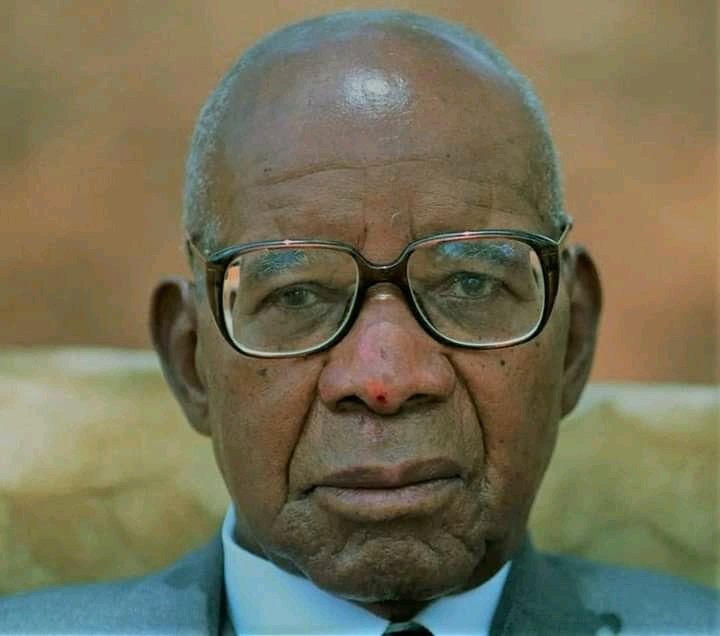
Monday, May 18, 2026In Malawi’s long and complex political memory, few figures remain as enigmatic as Dr. Hastings Kamuzu Banda. To the world, he was the founding president and later life president of Malawi to his people, he was a paradox simultaneously revered as the father of the nation and feared as an uncompromising autocrat. Beyond his rigid public image lay a private life shrouded in deliberate mystery, secrecy and unanswered questions.
Kamuzu Banda concealed even the most basic details of his personal life. His exact date of birth was never conclusively established, his marital status was officially nonexistent, and the possibility that he fathered children was consistently denied by the state machinery he controlled. This cultivated ambiguity was not accidental it was power by design. In Banda’s Malawi, uncertainty protected authority, and silence was policy.
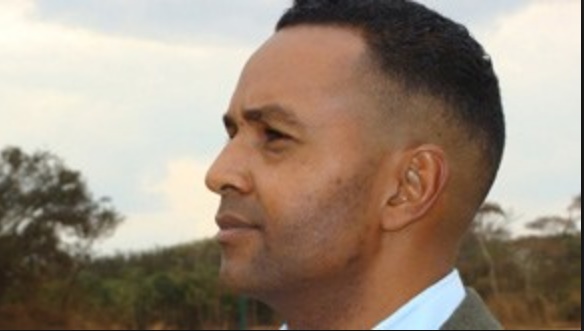
Yet history has a way of resisting erasure. One of the most compelling and tragic narratives to emerge from Banda’s shadow is that of Jumani Masauko Kamuzu Banda, widely believed to be the only son of Malawi’s founding president who dared to pursue the truth publicly.
Jumani was born on 2 May 1973 at Ekwendeni Mission Hospital in Mzimba to Mirriam Kaunda, a former Miss Malawi and Chief Air Hostess at Air Malawi. At the time, she was unmarried. The birth certificate bore no father’s name. Later, Jumani was officially adopted and, on 9 June 1978, he assumed the name Jumani Masauko Kamuzu Banda an act that would later define his life and ultimately, his death.
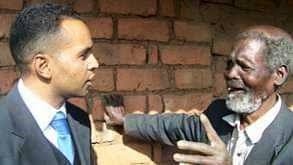
His mother later married a Swedish national, Mats Johansson, and Jumani grew up largely outside Malawi, removed from the political epicenter his name silently pointed toward. But questions of identity do not fade with distance. In 2010, Jumani returned to Malawi, driven by a determination to uncover the truth of his paternity. He sought the involvement of traditional leaders in Kasungu Kamuzu Banda’s home district and pursued the possibility of DNA testing, a bold and unprecedented challenge to a long-standing national taboo.
That pursuit would never be completed. I'mJumani died before the truth could be formally established.
In the aftermath of his death, suspicion and grief deepened. Johansson’s wife, Lebogang, publicly rejected the explanation that her husband had died of natural causes. She was convinced foul play was involved and her conviction echoed the fears of many who understood the weight of the history Jumani was attempting to confront.
At the time, Johansson had been staying in Malawi with his friend, Pastor James Mwanyongo, in Blantyre. According to accounts, promises of safety were made. They were broken. His death was reportedly masked as illness, and he was rushed to Queen Elizabeth Central Hospital, where he died in the early hours of a Saturday morning.
The hospital declined to disclose the cause of death, deferring all inquiries to the family. The silence was familiar. In Malawi, silence has often been the final chapter in stories that challenge power.
The story of Kamuzu Banda is therefore not only about a man who ruled with iron resolve, but also about the truths buried alongside his legacy. Jumani Masauko Kamuzu Banda’s life and death stand as a quiet indictment of a system that thrived on secrecy, and as a reminder that history is never fully settled only delayed.
The atmosphere of fear and enforced silence surrounding Kamuzu Banda’s private life was sustained by a powerful security machinery. Among the most influential figures was Focus Gwede, one of the top three police commanders of the era and head of the notorious Special Branch. This unit specialised in surveillance, intimidation, detention, and the elimination of innocent Malawians whose thoughts, writings, or speeches were deemed incompatible with the expectations of Hastings Kamuzu Banda, then Life President Ngwazi.
Notably, in 2010, Gwede broke ranks with decades of institutional silence by publicly supporting Johansson’s claims, stating that Banda had fathered three children. His admission carried particular weight given his former role at the centre of the regime’s secret police apparatus, and it further deepened public suspicion that the truth about Banda’s personal life had been deliberately suppressed through fear, coercion, and state power.