Location
Lilongwe
No reviews yet — be the first to share your experience!
Posted
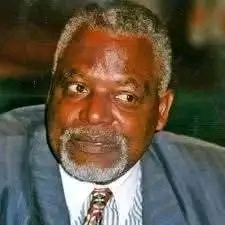
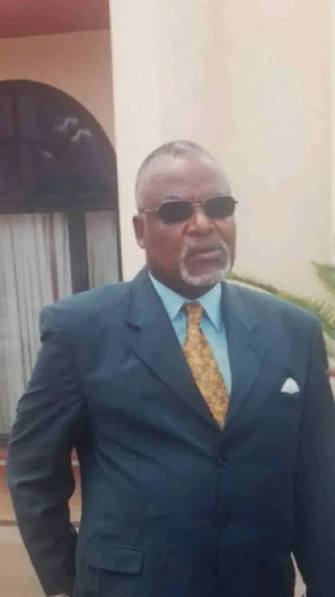
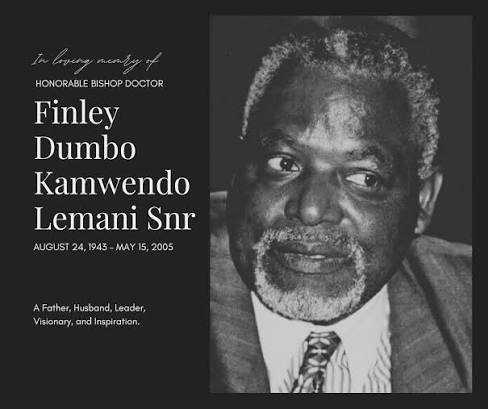
Wednesday, May 13, 2026In Malawi’s crowded gallery of post-independence political figures, few were as difficult to categorise or as impossible to ignore as Dumbo Lemani. Clergyman and politician, provocateur and performer, loyalist and liability, Lemani existed in permanent excess of definition. He was not merely controversial; he was theatrical controversy embodied.
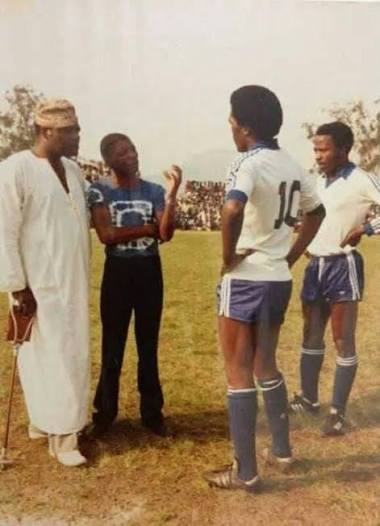
Those who encountered him in conversation often struggled to follow his syntax, yet somehow never missed his point. His mannerisms filled the gaps his words sometimes left behind. Meaning arrived not neatly, but forcefully through gesture, tone, bravado. Long before national politics fully claimed him, Lemani had already cultivated a public persona that thrived on attention. As team doctor for Mighty Wanderers in the 1980s, he became part of football folklore. When a Wanderers player went down injured, spectators especially Malawians of Asian origin would half-jokingly call out for Lemani to rush onto the pitch. His presence alone seemed to promise drama, if not recovery.
Politically, he was a man who irritated allies and adversaries in equal measure. Those across the divide often bristled at his habit of landing verbal jabs where they were least expected. He had an instinct for discomfort an ability to unsettle rooms, conversations, and institutions. This did not make him subtle; it made him memorable.
Lemani’s closeness to Bakili Muluzi was widely known. The two were described, without exaggeration, as inseparable at the height of their political alliance. In sport and politics alike, Lemani was labelled flamboyant, outspoken, carefree adjectives that multiplied faster than they could be restrained. Yet this same man threw his full weight behind one of the most controversial moments in Malawi’s democratic history the push for a third presidential term for Muluzi. For many, this single stance overshadowed every other claim he might have made to patriotism.
If his political loyalty raised eyebrows, his conduct during moments of confrontation raised alarm. In July 2001, the country was shaken by reports that Lemani had threatened a law lecturer at the Polytechnic, reportedly furious that his name was being used as a case study in lectures. The allegations delivered through institutional channels rather than denied outright had a chilling effect. Academic freedom, once taken for granted even during harsher political eras, suddenly felt fragile. The lecturer, warned by his superiors, altered his teaching out of fear. The episode revealed a dangerous overlap between political power, personal grievance, and institutional silence.
Lemani, characteristically, did not retreat. When confronted, he leaned into confrontation, dismissing critics as failures, accusing opponents of subversion and embracing the image of himself as volatile and untouchable. He called himself "dynamite." It was not metaphor meant to calm.
That volatility followed him even into the courts. In early 2001, Blantyre’s High Court became a stage as Lemani, then Minister of State for Presidential Affairs, appeared charged with contempt of court for defying a gag order related to the corruption case of Brown Mpinganjira. Unbothered, he arrived in style, flanked by supporters, openly taunting the possibility of imprisonment. He spoke casually of jail, invoking his past detention under Hastings Kamuzu Banda and daring history to repeat itself under a democratic government.
Outside the courtroom, he performed. Songs. Dances. Insults. Court officials protested the disruption; Lemani carried on regardless. This was politics as spectacle, defiance as theatre. When acquitted months later, he celebrated loudly Bible in one hand, clerical collar in place, chanting his freedom like a revivalist preacher who had just survived the fire.
President Muluzi once jokingly called him "the reverend without a church." The description stuck because it captured a deeper truth. Lemani was ordained, trained, and publicly religious, yet his pulpit was politics and his sermons were often delivered through intimidation, bravado, and song. He insisted that had he been convicted, he would have gone to prison not as a minister, but as a preacher ready to convert inmates. Even defiance, with Lemani, had to be theatrical.
As Member of Parliament for Zomba Thondwe, he campaigned not only with speeches but with sound. His radio jingles performed with the Nangalembe Brothers became political folklore "Mukanena za ine mutopa" Talking about me will tire you out; focus on work. It was mockery, warning, and branding rolled into melody. Politics, to Lemani, was not only debated it was sung.
In 2005, after the United Democratic Front had already handed power to Bingu wa Mutharika, Lemani startled the press by declaring openly "We rigged the 2004 elections." Coming from another figure, the statement might have triggered arrest or inquiry. Coming from Lemani, it was dismissed as the lament of a man who had fallen out of favour and relevance. He was ignored, not investigated.
That neglect followed him into his final days. Denied proper medical attention abroad, his life ended quietly another outsized personality reduced, at the end, to institutional indifference. With his death, Malawi lost not just a man, but a genre. There has been no replacement for Dumbo Lemani. No other politician has combined clerical dress, court drama, radio jingles, football folklore, and raw intimidation into one unruly career.
He was many things to many people. Hero. Bully. Entertainer. Loyalist. Liability. But above all, he was unforgettable.
If this kind of historically grounded, unsanitised writing matters to you, consider supporting MalawiHistoryOnline through our writing donation link.
👇 Link
Your support helps preserve Malawi’s political memory without fear, without polish, and without forgetting.