Location
Lilongwe
Posted
Saturday, March 7, 2026In 1953 Britain created the Federation of Rhodesia and Nyasaland, linking Northern Rhodesia, Southern Rhodesia and Nyasaland under one political structure.
The federation was designed largely to protect white settler economic interests, particularly those in Southern Rhodesia. Many Africans in Nyasaland, however, saw it as a mechanism that would entrench racial inequality and delay African political advancement.
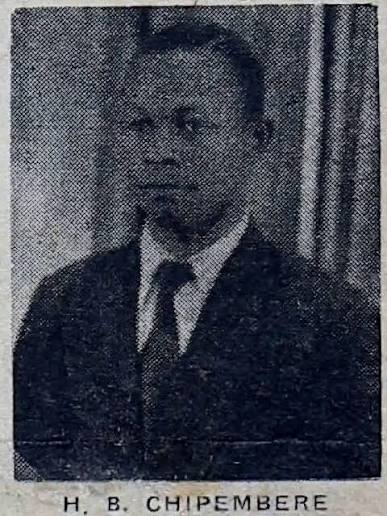
Opposition to federation intensified in the mid-1950s. The main political vehicle for this opposition was the Nyasaland African Congress (NAC), a nationalist movement advocating African representation and eventual independence.
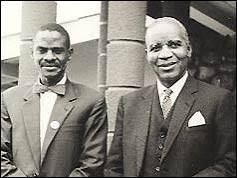
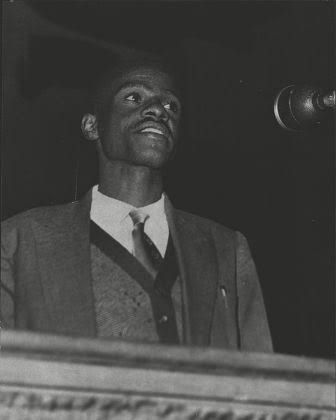
By the late 1950s the nationalist movement gained renewed momentum, especially after the return of Hastings Kamuzu Banda in 1958. Banda had spent decades abroad as a medical doctor and political activist. His arrival energized the Congress movement and unified various strands of African political resistance. Mass meetings, political rallies, and speeches against the federation quickly spread throughout the protectorate. Banda’s leadership transformed the Nyasaland African Congress from a modest political organization into a powerful nationalist movement capable of mobilizing thousands.
Several factors contributed to the rising tension in Nyasaland during this period. First it was opposition to Federation ,Many Africans feared that the Federation of Rhodesia and Nyasaland would permanently entrench white minority rule similar to that already existing in Southern Rhodesia. Secondly it was land and economic Inequality,African communities faced limited access to fertile land while European settlers controlled large estates. Economic policies also favored settler agriculture and commerce. Thirdly political exclusion, African representation in the colonial government remained minimal, reinforcing frustrations among educated Africans and nationalist leaders. Lastly was rising nationalist consciousness,across Africa the late 1950s witnessed a wave of decolonization movements. Nyasaland was not isolated from these continental developments.
By early 1959 tensions had escalated dramatically. Congress leaders intensified their criticism of colonial authorities and the federation. Demonstrations, strikes, and public meetings became more frequent.
The colonial government feared that nationalist agitation might develop into organized rebellion. Some European settlers and officials believed that Congress leaders were inciting violence against government authorities and European residents.
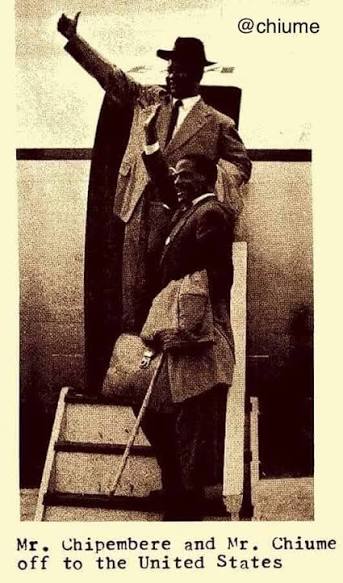
This climate of fear, suspicion, and political confrontation laid the groundwork for the crisis that followed. Before resorting to emergency measures, colonial authorities attempted to negotiate with Congress leaders. However, talks between the government and Hastings Kamuzu Banda failed to reach a compromise.
Congress demanded constitutional reforms and steps toward majority rule, while the colonial government insisted on maintaining federation and limiting the pace of African political advancement.
No reviews yet — be the first to share your experience!
The negotiations collapsed, deepening mistrust on both sides. One of the most controversial claims made by the colonial authorities was the existence of a supposed "murder plot" by Congress leaders.
According to the government, some Congress activists had planned to assassinate European settlers, government officials, and African political opponents as part of a violent uprising.
This alleged conspiracy became the central justification for the government’s drastic response. However, critics argued that the so-called plot was exaggerated or fabricated to justify suppressing the nationalist movement. On 3 March 1959, the colonial administration declared a state of emergency in Nyasaland.
Security forces arrested hundreds of Congress leaders and activists, including Hastings Kamuzu Banda. The Nyasaland African Congress was banned.
During the crackdown several civilians were killed when colonial troops and police opened fire on protestors. These events later became commemorated in Malawi as Martyrs’ Day.
The violence and mass arrests drew widespread criticism internationally and forced Britain to investigate the situation.
In response to growing criticism, the British government appointed the Devlin Commission in April 1959.
The commission was chaired by Lord Patrick Devlin, a respected British judge. Its mandate was to investigate the causes of the disturbances in Nyasaland and assess whether the government’s emergency measures were justified.
The appointment signaled that London recognized the seriousness of the crisis. The Devlin Commission traveled to Nyasaland and conducted extensive hearings. It gathered testimony from:
The inquiry examined documents, government reports, and witness accounts related to the unrest and the emergency declaration. This process allowed the commission to reconstruct the events leading up to the crackdown.
The commission’s report, released later in 1959, produced several important conclusions. Perhaps the most famous statement in the report described Nyasaland under the emergency as resembling a police state.
This phrase shocked the colonial administration and attracted international attention. The commission concluded that although some inflammatory rhetoric existed among Congress activists, there was no convincing evidence of a coordinated plan for mass murder as claimed by the colonial authorities.
The report acknowledged that the colonial government had acted out of fear but suggested that its response had been excessive. The commission recognized that African political frustrations, especially regarding federation and lack of representation, were legitimate.
The Devlin Commission’s findings were fiercely criticized by defenders of colonial rule. Many colonial officials and settlers accused the commission of misunderstanding the security situation. Some argued that the report underestimated the threat posed by Congress militants.
The colonial government commissioned a counter-report, sometimes referred to as the rmitage Report, which attempted to justify the emergency measures. This created a rare public dispute between official colonial authorities and an independent investigative body.
Over time, however, Devlin’s conclusions gained credibility. Subsequent political developments showed that the nationalist movement in Nyasaland was primarily seeking political reform rather than violent revolution.
The emergency crackdown had not eliminated the demand for independence; instead it strengthened international support for African self-government. In 1960 Britain began negotiating constitutional reforms that would ultimately dismantle the federation.
The Devlin Commission marked a crucial moment in the political history of Nyasaland. Its findings weakened the legitimacy of colonial rule and accelerated the process of political transition. Within a few years the federation collapsed, and Nyasaland moved toward independence.
In 1964, Nyasaland became the independent nation of Malawi, with Hastings Kamuzu Banda as its first Prime Minister and later President.
Looking back, the Devlin Commission demonstrated the power of independent inquiry in challenging official narratives and exposing the realities of colonial governance.
It also revealed that the forces driving African nationalism were far deeper than colonial authorities had imagined.
The events of 1959 and the investigation that followed remain a powerful reminder that the path to freedom in Malawi was shaped not only by political struggle on the ground but also by the search for truth in moments of national crisis. 62 years after independence, we must honestly ask ourselves, have we truly achieved what the martyrs died for?The martyrs did not die simply for political independence. They died for a Malawi built on justice, equality, unity, and dignity for all. They believed in a country where leaders would serve the people with honesty and where national resources would improve the lives of every citizen not selected few.